AI Book Illustration for Authors: 5 Styles for 2026
A working 2026 playbook for self-published authors: five FLUX 2 Pro illustration styles across fantasy, historical, sci-fi and romance, with consistency and print-resolution rules.
AI Book Illustration for Authors: 5 Styles for 2026
Commissioning original interior art for a novel still runs $150–$700 per illustration in 2026, and a fully illustrated indie edition can pass $3,000 before the book earns a single sale. FLUX 2 Pro from Black Forest Labs collapses that budget: we generated all five illustrations in this guide with the same model across five runs in under 75 seconds of total render time, each at 1024×1024. This is a working playbook for self-published authors — five genre styles you can adapt tonight, from epic-fantasy full-pages to intimate literary character moments, plus the consistency and print-resolution rules that separate a finished edition from an obviously-AI one.
By Ropewalk Team. Tested on 2026-07-03 — every illustration below was generated with FLUX 2 Pro across 5 runs in under 75 seconds of combined render time.
Why FLUX 2 Pro for book interiors
FLUX 2 Pro is the workhorse we reach for when a scene has to read as a deliberate illustration rather than a stock render. In our testing it holds long, layered prompts — figure, setting, lighting, and art-medium in one pass — and renders each 1024×1024 frame in roughly 10–14 seconds. That prompt adherence matters for fiction, where a chapter plate has to match what a reader just imagined. The card below pulls its live per-generation cost and description straight from the platform, so you always see the current price before you spend. For self-published authors that means you can iterate through 10 or 20 variations of a single scene for the cost of one traditional commission, then keep only the frame that fits your manuscript.
Epic fantasy: full-page scenes with real depth
Epic fantasy sells on scale, and a full-page plate at a chapter break is where indie fantasy editions win reader trust. The move here is to name one focal figure for scale, one dramatic light source, and an explicit art medium — we used "ink-wash and gouache" to pull the render away from glossy 3D. FLUX 2 Pro rendered the dragon-and-citadel plate below in 11 seconds at 1024×1024, with the lone rider giving the towering beast a believable sense of size. Keep your fantasy prompts to one hero moment per image; two competing subjects flatten the depth. Reserve these expensive-looking full-pages for act breaks — three or four across a 90,000-word novel is plenty, and scarcity makes each one land harder.
Literary & historical fiction: character moments
Literary and historical fiction rarely needs spectacle — it needs one honest human beat. For these plates we prompt a single figure, a specific period detail, and a motivated light source, then let the medium do the aging. The 1890s attic scene below took 14 seconds and leans on cross-hatched ink-and-watercolor to feel hand-drawn rather than photographed, which suits a Victorian or early-20th-century setting. Ground every prompt in a decade and a concrete object — "a worn wool dress," "a guttering candle," "a letter" — because vague period prompts drift toward costume-drama cliché. One quiet character plate per part of the book, roughly 4–6 across a full novel, gives historical fiction a literary texture without tipping into illustrated-children's-book territory.
Science fiction: worldbuilding that sells the premise
Science fiction is the genre where one interior plate can do the work of three pages of exposition. The trick is to illustrate the premise, not the plot: pick the single image that answers "what makes this world different?" Our monolith scene rendered in 13 seconds and uses a lone astronaut for scale against a ringed planet — the figure-to-landscape ratio is what makes the alien structure read as enormous. Push saturated accent colors (we used turquoise glyphs against violet dunes) so the frame stays legible even shrunk to a 6×9-inch page. For a sci-fi series, one worldbuilding plate per book keeps continuity cheap while giving readers a visual anchor they'll recognize on the next cover.
Romance & contemporary: emotion over spectacle
Romance and contemporary fiction convert on feeling, not fireworks, so the prompt should engineer body language and light instead of setting. The rainy-street plate below took 11 seconds and puts everything into two figures under one umbrella, with warm shopfront light doing the emotional lifting against a cool blue night. Keep faces slightly turned or softly lit — readers project their own protagonists onto illustrated couples, and an over-defined face breaks that spell. A single mood plate at the start of a romance, or one per act in a slow-burn, is usually enough; contemporary readers expect restraint, and a 1024×1024 illustration used sparingly reads as intentional design rather than filler.
Keeping one look across the whole book
The fastest way to look amateur is to mix four illustration styles in one book. Lock a single "style spine" — a fixed phrase like "ink-and-watercolor book illustration, high contrast" — and paste it into every prompt so all your plates share a visual family. For recurring characters, generate a reference plate first, then reuse the same physical description word-for-word in later scenes; for tighter face consistency across chapters, take that reference into an edit-first model and see our Nano Banana Pro guide for instruction-based edits. If you're illustrating a children's title instead of adult fiction, the softer, character-driven approach in our children's book illustration guide is the better starting point. Aim for one consistent look across all 4–6 plates in the book.
A repeatable four-step workflow
Treat illustration as a pipeline, not a lottery, and a full novel's art becomes a weekend job. Here is the exact loop we used to make the four plates above, start to finish:
- Draft the prompt — one figure, one light source, and one medium phrase from your style spine.
- Generate 3–4 variations at 1024×1024, then pick the strongest read at thumbnail size.
- Edit for continuity — carry recurring characters into an instruction-edit model so faces match across chapters.
- Upscale 2–4× and export a 300 DPI file sized to your book's trim.
Run that loop once per act break and you'll have 4–6 finished plates in a single afternoon — the same coverage a $2,000 illustration package buys, at a fraction of the cost and with every frame tuned to your manuscript.
Print resolution, cost, and rights
One number decides whether your art survives print: resolution. Each generation here is 1024×1024, or 1 MP — about 3.4 inches wide at a print-grade 300 DPI, which is fine for a half-page plate but short for a full 6×9-inch page. For full-bleed interior art or a wraparound cover, upscale the frame 2–4× before you send the file to KDP or IngramSpark. On rights: images you generate are yours to use commercially, so a fully illustrated edition carries no per-image licensing tail the way stock art does. Budget-wise, iterating 20 candidate frames still costs a fraction of one $300 commission. For the cover itself — a different discipline with spine and bleed math — start from our AI book cover design guide, and check pricing for plan details.
Your next illustration
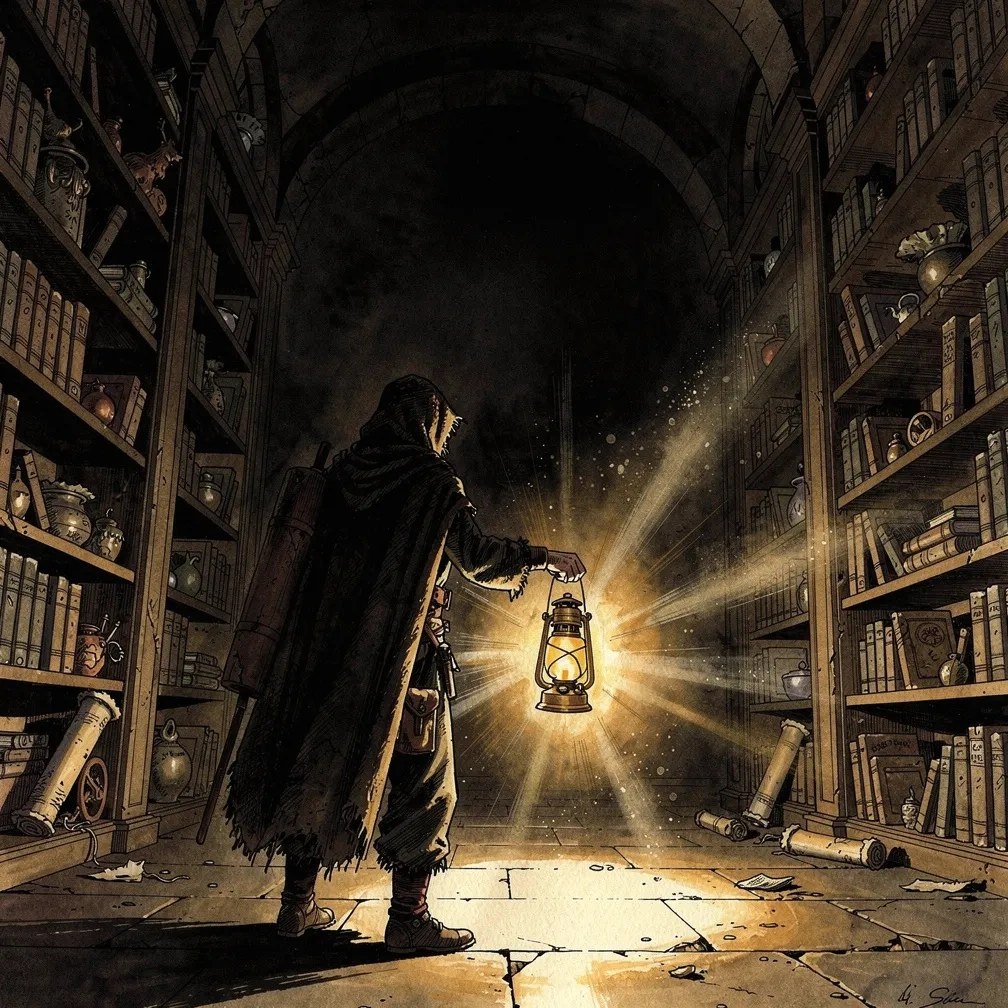
Pick the single most cinematic moment in your manuscript and render it first — a strong chapter-one plate sets the visual contract for the whole book. Below is a starter prompt for a fantasy-flavored study scene you can adapt to your own protagonist; swap the subject, keep the style spine, and generate three or four variations before you commit. Open a chat, paste, and you'll have a print-candidate illustration in about 12 seconds. From there, work outward one act at a time: illustrate the three or four scenes readers will actually remember, keep every plate on the same style spine, and upscale the winners before print. A 90,000-word novel needs only 4–6 plates to feel fully illustrated — a weekend of iteration in 2026, not a month's commission budget.
Comments
Comments feature coming soon! Stay tuned.